
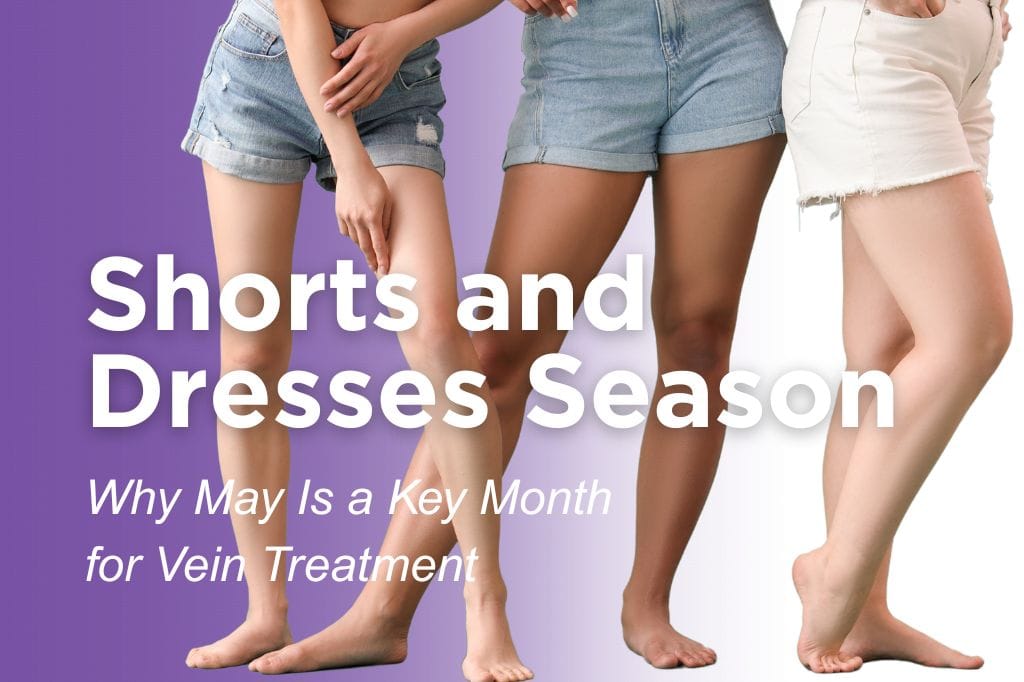
If warmer weather has you reaching for shorts or dresses, visible veins may be on your mind. May is a great time to start vein treatment. It is early enough for healing before peak summer and late enough that warmer days reveal symptoms you may have hidden all winter. Starting now can mean clear results by midsummer — both comfort and confidence when your legs are most visible.
Many patients put off vein care because they think it takes a long time to recover. In reality, modern vein procedures are quick, done in-office, and most people return to normal activities the same day. Knowing why timing matters — and what the process looks like — can help you make a choice that fits your schedule and your summer plans.
Why Do Vein Symptoms Often Appear in Spring?
As temperatures rise, veins expand to help the body cool down. For patients with venous reflux — when vein valves do not close properly and blood pools in the legs — this makes symptoms worse. You may start to see bulging veins, feel leg heaviness by evening, or notice swelling that was not there in cooler months.
Spring is when many patients first realize their vein concerns have grown. Visible varicose veins and spider veins stand out more as legs are uncovered. Aching, throbbing, or restless legs may get worse with rising heat. These changes are not just about looks — they can point to a condition that gets worse over time without care. However, effective treatment is available and can make a real difference.
How Long Does Vein Treatment Take Before You See Results?
One of the most common questions is how quickly results show up. The answer depends on the type and severity of the condition, but many patients see changes within a few weeks.
Sclerotherapy, used for spider veins and smaller varicose veins, involves injecting a solution that causes the vein to collapse and fade. Most patients see results within four to six weeks, though some veins need more than one session. Sclerotherapy is widely recognized as one of the most effective options for these smaller veins.
Venefit™, a radiofrequency ablation procedure, closes larger diseased veins in about fifteen minutes. Results develop over the following weeks as blood reroutes to healthier veins.
VenaSeal™, the only non-thermal, non-tumescent closure system approved in the United States, uses a medical adhesive to seal veins with minimal needle sticks and no anesthesia.
Starting in May gives your body time to heal before the height of summer. There are strong reasons to act in spring rather than waiting until fall or winter, when many clinics see a rush of year-end patients.
What Does the Treatment Process Look Like?
At The Vein Guys, your journey begins with a full evaluation. A board-certified physician reviews your history and symptoms. A Certified Registered Vascular Technologist (RVT) performs a venous ultrasound to check blood flow and valve function in your legs. This step shows whether venous reflux or another issue is behind your symptoms.
Based on the results, your care team creates a personal treatment plan. The procedures are done in the office with minimal downtime. Most visits take under an hour, and patients walk out on their own and get back to daily life quickly.
For patients with venous reflux disease, treatment often follows a staged approach. The reflux is treated first. Then surface veins, like spider veins, are addressed in later sessions. This ensures the root cause is fixed before cosmetic concerns are handled.
Does Insurance Cover Vein Treatment?
Many patients are surprised to learn that treatment is often covered by insurance when deemed medically necessary. Conditions like chronic venous insufficiency, varicose veins causing symptoms, and venous reflux disease often meet the criteria.
Insurance coverage usually requires records of symptoms and a period of conservative management. This may include wearing compression stockings, regular walking, leg elevation during rest, and breaks from sitting or standing for long stretches. This period may last several weeks — another reason why starting in May makes sense. Beginning your evaluation now gives time for any needed steps, so treatment can happen on your timeline.
The Vein Guys verify your benefits before treatment starts, so you know what to expect before any procedure.
What Can You Do Now to Support Your Vein Health?
While you prepare for treatment, these steps can help ease symptoms:
- Wear graduated compression stockings during the day
- Walk regularly — even short walks boost circulation
- Elevate your legs above heart level when resting
- Stay hydrated and maintain a healthy weight
- Take breaks from sitting or standing — move every thirty to sixty minutes
These habits help manage discomfort. Your physician may suggest them as part of your overall plan. Keep in mind that vein disease has strong genetic and hormonal causes that lifestyle alone cannot fix. A professional evaluation can show whether treatment is right for you.
Why Choose The Vein Guys for Spring Vein Treatment?
The Vein Guys have performed over forty thousand successful vein procedures across five locations in Georgia, Tennessee, and Louisiana. Every procedure is performed by a board-certified physician. Every ultrasound is done by a Certified Registered Vascular Technologist. With over twenty years of experience treating vein conditions, the practice focuses on personal care plans, quick in-office visits, and patient support.
Whether you deal with spider veins that affect your confidence or varicose veins that cause daily discomfort, an evaluation can help find the right path forward.
How Long After Vein Treatment Should You Avoid Sun Exposure?
Most physicians suggest limiting direct sun on treated areas for several weeks after sclerotherapy. Sun can darken healing skin and affect how treated veins fade. Wearing sunscreen and covering treated areas during peak sun hours helps ensure the best results. Sun avoidance is one reason many patients choose spring for treatment.
